

Paper
Afreen Akhter
{
  "authors": [
    "Afreen Akhter"
  ],
  "type": "commentary",
  "blog": "Emissary",
  "centerAffiliationAll": "dc",
  "centers": [
    "Carnegie Endowment for International Peace"
  ],
  "englishNewsletterAll": "americanStatecraft",
  "nonEnglishNewsletterAll": "",
  "programAffiliation": "ASP",
  "programs": [
    "American Statecraft"
  ],
  "regions": [
    "United States",
    "China"
  ],
  "topics": [
    "Economy",
    "Trade",
    "Foreign Policy",
    "Domestic Politics"
  ]
}

Photo by Art Wager/iStock
Five problems—and solutions—to make it actually work as a tool of great power competition.
The Export-Import Bank of the United States (EXIM) is underperforming for today’s geopolitical contest. For decades, EXIM—which helps U.S. companies sell their goods abroad, particularly when private lenders won’t take the risk or when foreign competitors are backed by their own governments—had a relatively narrow role in U.S. trade. But that changed with the rise of China.
Over the past few decades, Beijing has deployed hundreds of billions of dollars through the Export-Import Bank of China, the China Development Bank, and Sinosure to build infrastructure and position Chinese firms in emerging markets. From 2015 to 2019, China’s export credit volume reached roughly 90 percent of the G7 combined. The scale focused Congress’s attention.
In response, Washington tried to pivot, directing the agency to focus on U.S. interests. In 2019, Congress established the China and Transformational Exports Program (CTEP), requiring at least 20 percent of EXIM’s portfolio focus on ten strategic sectors, including artificial intelligence, semiconductors, and renewable energy. EXIM’s board launched initiatives to support domestic manufacturing and to secure supply chains.
EXIM is now expected to operate as a strategic agency in great power competition, yet its structure, rules, and staffing still reflect its earlier role. That mismatch now defines the institution. With EXIM’s authorization set to expire in December, Washington faces a consequential choice: It can refashion the agency into a serious instrument of American power capable of advancing technological competition, domestic manufacturing, and supply chain security. Or it can leave EXIM a relic of an earlier era and watch as it steadily loses ground in contested markets, cedes opportunities to competitors, and drifts toward irrelevance. Here are five ways it can take the first path and do better.
Problem 1: EXIM’s structure discourages strategic transactions.
Solution: Establish a national interest window that incentivizes strategic risk.
Despite its new strategic mission, EXIM continues to behave as a cautious financier of discrete exports—items such as commercial aircraft or heavy machinery. EXIM’s inspector general found that CTEP lacked strategic design, did not define clear roles, and failed to use the flexibilities Congress provided. EXIM’s incentives remain aligned with transactions that have predictable repayment profiles. That orientation is visible in its portfolio: In 2025, aircraft still accounted for 28.1 percent of the agency’s total exposure, six years after Congress directed a shift toward strategic sectors.
A structural change is required. Export Finance Australia offers a relevant model, operating separate commercial and national interest accounts. Under its national interest account, the government can direct support for transactions in areas such as critical minerals, defense exports, and Indo-Pacific infrastructure, with the commonwealth assuming associated losses. Australia’s architecture changes the psychology of risk tolerance within the institution because it reduces the penalty for pursuing higher-risk, strategically important projects.
A comparable two-window approach at EXIM would clarify that national interest transactions—specifically those aimed at competing with China, rebuilding domestic manufacturing, and securing supply chains—should be evaluated on their contribution to national objectives rather than on near-term financial certainty. Pairing a national interest window with a modest, dedicated reserve account to absorb losses on higher-risk transactions could reinforce that signal, aligning internal incentives with congressional intent.
Problem 2: The default rate cap drives institutional risk aversion.
Solution: Eliminate the cap and manage risk across the portfolio.
EXIM is the only major export credit agency required to suspend new lending if its default rate exceeds 2 percent, a threshold established in 2012 amid opposition from congressional fiscal hawks who deemed the agency “corporate welfare.” But the cap reflects a crude understanding of risk. It does not distinguish between temporary payment disruptions and a loss, and it applies uniformly across all transactions, regardless of strategic value. Former officials consistently identify it as the central reason the bank avoids riskier, more strategic transactions.
Peer institutions manage risk differently. The Japan Bank for International Cooperation and Export Finance Australia rely on underwriting, pricing, and portfolio diversification rather than a hard cap. Within the U.S. government, the Development Finance Corporation (DFC) does not have a default rate cap, operating with a portfolio-based risk framework. Congress could allow EXIM to rely on the same tools and eliminate the cap.
Problem 3: Domestic content rules do not reflect how modern industries operate.
Solution: Replace rigid thresholds with an economic impact framework.
EXIM’s domestic content policy, which was established in 1987, requires that a product must contain 85 percent U.S.-originated materials (also known as U.S. “content”) for full support on medium- and long-term deals. This requirement not only rests on the untested premise that more U.S. content means more U.S. jobs, it also impedes lending for some of today’s most strategic industries. In nuclear energy and semiconductors, for instance, production spans borders, and some critical components can only be produced outside America. But EXIM support for these industries still makes sense strategically and can drive meaningful economic activity in the United States, where firms can lead design, engineering, and long-term services.
Foreign export credit agencies have adapted more readily. Some allow much lower domestic content thresholds, while others examine broader national economic benefit. EXIM has taken a partial step in this direction—its Make More in America Initiative uses a different approach, evaluating how a project sustains U.S. jobs over time across construction, manufacturing, and related activity tied to the investment.
Domestic content should remain part of the analysis, but not as the gatekeeper. EXIM should focus on whether a transaction supports American jobs through production, engineering, services, and supply chains. For transactions with lower U.S. content, EXIM could require a plan for how the deal will generate and sustain jobs over time. This approach would better support American workers in both strategic and commercial sectors, where supply chains are not confined within U.S. borders.
Problem 4: Legislated strategic sectors do not keep pace with modern competition.
Solution: Delegate sector prioritization to EXIM’s board, with regular review.
Congress directed EXIM to prioritize ten sectors in 2019 to compete with China. But that has created rigidity in a landscape defined by rapid technological change. Nuclear energy, now a bipartisan priority, was not on the original list. Quantum computing was on the original list, but seven years later, the sector is still not mature enough for meaningful EXIM support. Congress could instead authorize EXIM’s board to identify priority sectors, with periodic updates and congressional consultation.
Problem 5: Institutional capacity does not match the expanded mandate.
Solution: Invest in staffing, compensation, and specialized capabilities.
The bank would also benefit from broadened capacity. With just over 300 staff, a significant share nearing retirement, and no special pay authority to compete with peer agencies such as the DFC or the Federal Deposit Insurance Corporation for technical talent, EXIM will struggle to deliver on these priorities without change.
Export finance remains one of the few instruments the U.S. government can deploy to shape markets, strengthen supply chains, and support strategic sectors. The December reauthorization is an opportunity to rebuild the institution to match that ambition.

Former Visiting Scholar, American Statecraft Program
Afreen Akhter was a visiting scholar with the American Statecraft Program at the Carnegie Endowment for International Peace. Her work focuses on economic statecraft, state capacity, and Congress’ role in foreign policy.
Recent Work
Afreen Akhter
Carnegie does not take institutional positions on public policy issues; the views represented herein are those of the author(s) and do not necessarily reflect the views of Carnegie, its staff, or its trustees.

The impacts of the Faye-Sonko rupture could go well beyond the country’s borders.

Lesley Anne Warner
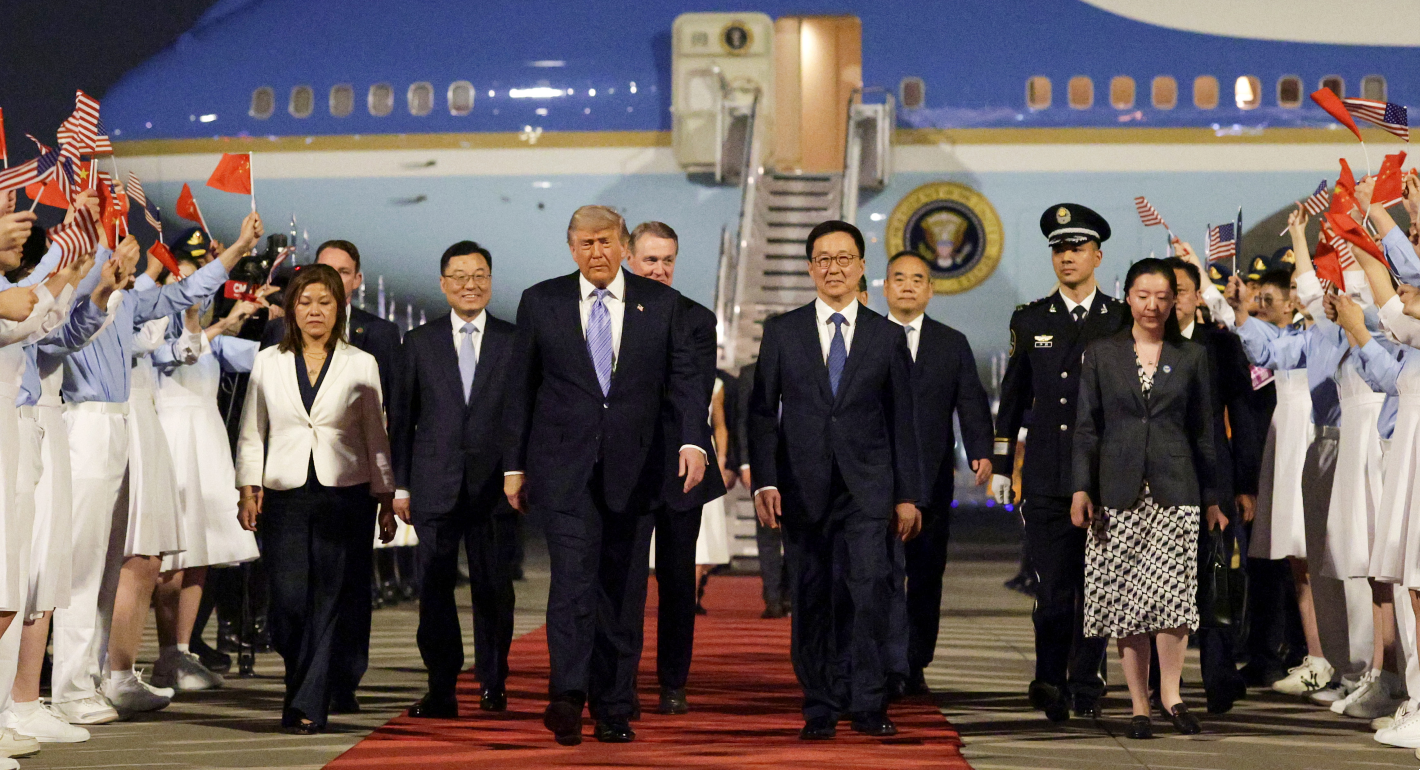
Why the outcomes of the U.S.-China meetings may be limited.


Aaron David Miller, David Rennie
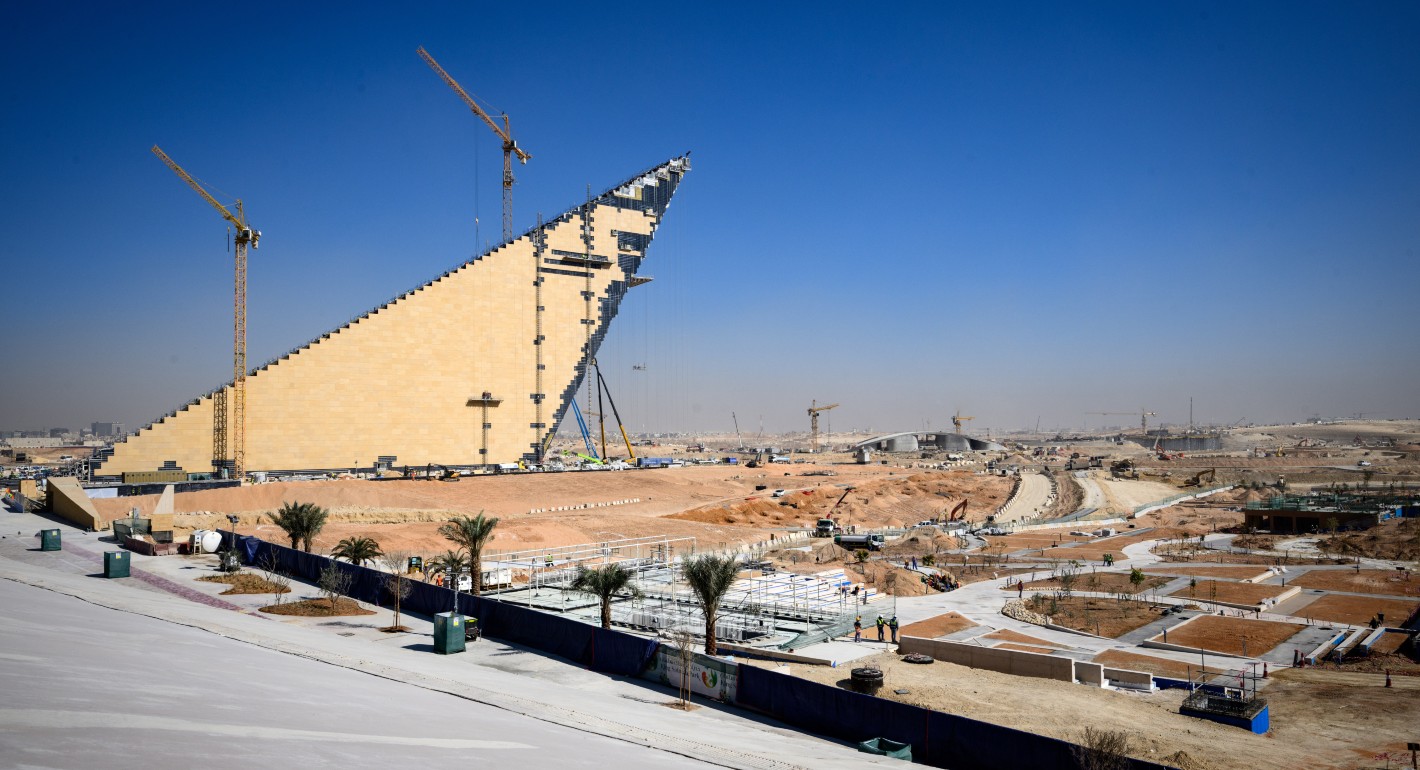
As the monarchy appears to question its grandest projects, the state could do with more critical debate than rote cheerleading.

Andrew Leber

The United States ignores the region’s lived experience—and the tough political and social trade-offs the war has produced—at its peril.

Evan A. Feigenbaum

As the Iran war shocks oil prices, countries that have invested in renewables, EVs, and battery development since the 2022 Russian invasion of Ukraine are seeing the value of their investments.

Noah Gordon