

Commentary
Rym Momtaz, ed.
{
  "authors": [
    "Rym Momtaz"
  ],
  "type": "commentary",
  "blog": "Strategic Europe",
  "centerAffiliationAll": "",
  "centers": [
    "Carnegie Endowment for International Peace",
    "Carnegie Europe"
  ],
  "englishNewsletterAll": "",
  "nonEnglishNewsletterAll": "",
  "primaryCenter": "Carnegie Europe",
  "programAffiliation": "",
  "regions": [
    "Europe",
    "Western Europe",
    "France",
    "Germany"
  ],
  "topics": [
    "EU",
    "Foreign Policy",
    "Climate Change",
    "Security"
  ]
}
Source: Getty
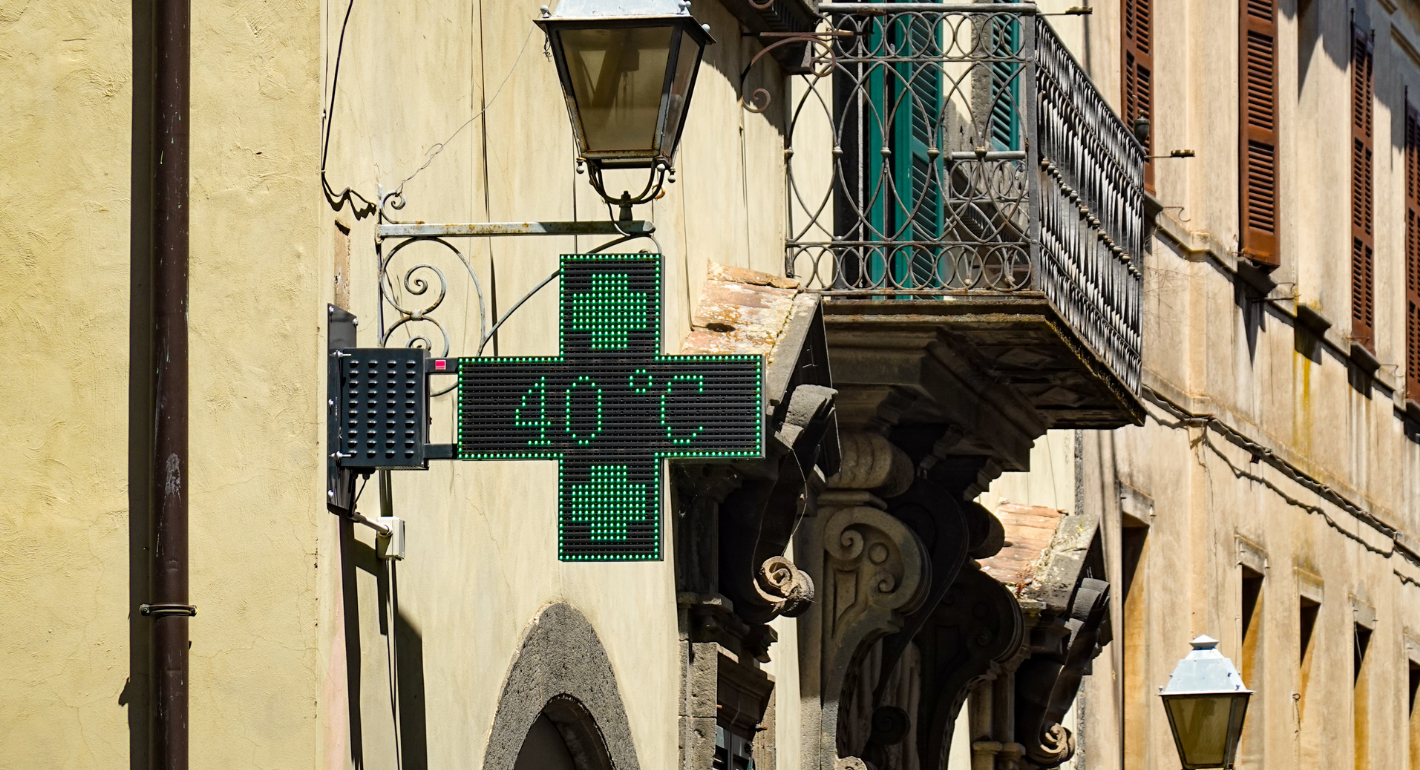
Western Europe’s dual-use infrastructure melted down during its latest heat wave. If a predicted hot weather event can take the continent by surprise, what chance does it have to withstand unexpected geopolitical crises?
Western Europe is staring down the barrel of a third heat wave of extraordinary proportions since May 27.
Most climatologists expect this to become a much more routine occurrence in the years to come.
And yet, most Western European countries remain woefully under-prepared. Just have a listen to the raging arguments over air-conditioning that have gripped Belgium, France, Germany, and the UK over the past week. Though the first extraordinary heatwave of this type hit the continent 23 years ago, these countries and others are still struggling with basic adaptation.
The debate may seem like a frivolous sideshow, amusing in the way Europe can be quirkily stuck in its old ways. But it epitomizes a central feature of that is crippling its the race to assert power on the new global chessboard: a systemic resistance to quick, effective, wholesale transformation even in the face of vital threats. Nowhere has it been clearer than on the EU’s adaptation to climate change and to the end of the U.S.-guaranteed security order.
As it turns out, American President Donald Trump and his brutal methods have been more effective at electroshocking the Europeans into taking more of their defense into their own hands than deaths from heatwaves have been in spurring the transformational adaptation needed to address the climate crisis. Both are equally urgent.
A bloc whose wealthiest and most powerful countries grind to a halt because of a reality that has been building up for more than two decades is not ready for primetime. This lack of preparation isn’t just a public policy or public health problem, it represents a major geopolitical vulnerability. Why wouldn’t a foe like Russian President Vladimir Putin attack a NATO country while Western Europe is melting down because of a heat wave?
When the official advice of Germany’s environment ministry is that air conditioners “do not cool effectively,” and when the official advice from France’s health ministry is simply to advise people to “not go out during the hottest hours (11 a.m.–9 p.m.),” severe doubts over these governments’ ability to effectively deter and repel war are raised. Neither inspires confidence. Why trust them to manage defense if they can’t properly manage a heatwave?
During this seven day heat wave, essential dual-use infrastructure was severely stressed. Rail tracks were melting, the trains that did run were delayed, and many suffered air-conditioning or ventilation problems that forced passengers to cram into overcrowded carriages. Most hospital rooms, like most schools and daycares, became dangerous given their lack of proper cooling systems, with indoor temperatures above 30 degrees Celsius. Farmers have been massively hit, with livestock suffering and even dying while fields burned. Even the urban economy, where cooling systems are more prevalent, was disrupted as workers with children and elderly relatives had to improvise care.
That is a paralyzing succession of events that a union facing Russia’s military threat, China’s economic onslaught, and the United States’ aggressive reversal cannot afford.
None of this was inevitable. In fact, all of it was predictable—and indeed predicted—by years of scientific research and modelling. But on the continent of the Enlightenment, scientific research and reason have had to battle against navel-gazing, dogmatic, zero-sum thinking.
Public debates in France or Germany about the heat wave and the best ways to adapt to it have almost completely omitted the global dimension of climate. They have given the impression that stringent European green transition regulation, with a bit of suffering through the heat, is enough to spare the continent future climate crises. Nothing could be less scientific, of course. A renewed global strategy to mitigate the devastating impacts of climate change is needed. What happens in New Delhi, Beijing, Abu Dhabi, or Washington also shapes the domino effect of weather systems.
New hospitals, schools, daycares, and railway stations built after the deadly 2003 heat wave were designed deliberately without air-conditioning. The dogma being that including it would encourage people to drop the green transition measures that the EU has led the world on.
But a holistic approach is necessary. Given the high temperatures, climate modelling is expecting hot weather events to become increasingly common over the coming decades. Revegetation, better isolated buildings, and shutters won’t be enough. After a week of sustained high temperatures even at night, these methods cannot cool indoor spaces enough to keep them livable, especially for the elderly, the sick, and children. Air-conditioning becomes a necessity that saves lives in times of peak heat. It is also not more polluting than refrigerators, and doesn’t produce more urban heat than cars. All these methods need to be combined, in addition to wider societal and geographic adaptations.
In a country like France, with one of the most carbon-free energy mixes thanks to its nuclear power, the cost-benefit analysis of air-conditioning should be a no-brainer once the weight of heat-related deaths and geopolitical signaling is taken into account.
Europeans are not completely transformation-retardant. Some individual countries have shown great flexibility and ingenuity after massive crises. Sweden’s fiscal and social model revolution in the 1990s, Estonia’s whole-of-country digital transformation post-2007, and Finland’s recent overhaul of its long-standing security model prove that epochal change is possible.
Even at the EU level, there have been glimmers of hope. The post-Covid-19 recovery fund and the creative use of the European Peace Facility in response to Russia’s invasion of Ukraine were watershed moments.
The recurring problem, though, is that none of these encouraging first steps have been pushed far or fast enough to be relevant or effective in responding to the crises at hand.
The climate and security double crisis is already here. Both require local and global action by the union and member states, in addition to willing likeminded partner countries like the UK, Canada, and others. Locally, the only way to weather it while preserving Europe’s way of life and values is through a much faster and more pragmatic simplification of norms and the facilitation of innovation and growth. Regulation originally meant to preserve a high quality of life is now costing lives. Globally, it is through a more effective and intense diplomatic strategy to reinject common rules into the global system that change can be achieved. Both are well within reach for the bloc and member states.
Subscribe to Strategic Europe, delivered to you weekdays!

Editor in Chief, Strategic Europe
Rym Momtaz is the editor in chief of Carnegie Europe’s blog Strategic Europe. A multiple Emmy award-winning journalist-turned-analyst, she specializes in Europe and the Middle East and the interplay between those two spaces.
Recent Work
Rym Momtaz, ed.
Rym Momtaz
Carnegie does not take institutional positions on public policy issues; the views represented herein are those of the author(s) and do not necessarily reflect the views of Carnegie, its staff, or its trustees.
There is an elephant in the room when it comes to the EU’s upcoming security strategy: Donald Trump. Unless European leaders acknowledge the depth of the transatlantic crisis, true autonomy will remain out of reach.

Stefan Lehne
Defense tech innovations will be at the heart of Europe’s new security strategy. But so far, Brussels has been making moves without a broader plan, undermining readiness and credibility.

Raluca Csernatoni

When the U.S.-Iran memorandum of understanding was announced, the UK, France, Germany, and Italy declared their readiness to help demine the Strait of Hormuz and lift nuclear sanctions on Tehran. But does Europe need new tools to recover a diplomatic role?
Rym Momtaz, ed.
The Franco-German relationship is on the rocks again. But unlike previous moments of tension, the epochal changes on the world stage require that both step up investment in their bilateral ties.
Rym Momtaz
The EU is putting together a new security strategy to meet today’s myriad challenges. But for any proposal to be effective, the union needs to grapple with its identity and ambitions.

Pierre Vimont